


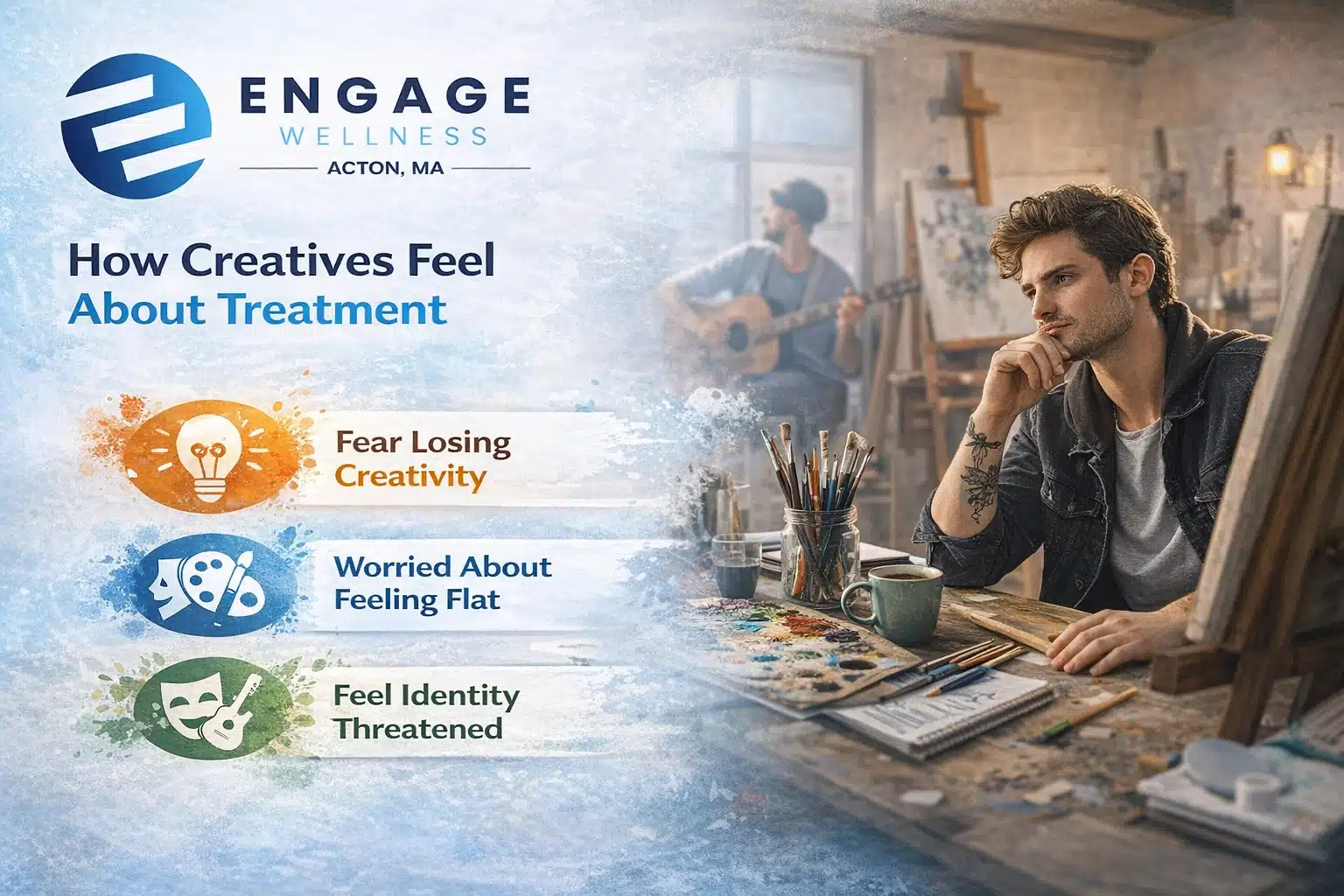
If you’re creative, sensitive, intense, or deeply expressive, this fear can feel almost unbearable:
What if getting help changes me?
What if it flattens me?
What if I lose the very thing that makes me… me?
I’ve had this conversation with musicians, tattoo artists, writers, designers, founders, and performers. And if you’ve been looking into Opioid Addiction Treatment but hesitating because you’re afraid it will kill your creativity, I want to speak to that fear directly.
Not with a lecture.
Not with clichés.
But with honesty.
The Story We Tell Ourselves About Pain And Art
There’s a powerful cultural myth that creativity and suffering are inseparable.
That your edge comes from chaos.
That your depth comes from darkness.
That your brilliance lives inside instability.
Substances can start to feel like part of that equation.
You might think:
- “I write better when I’m high.”
- “I feel more connected to emotion.”
- “It loosens me up socially.”
- “It makes me more original.”
In the beginning, substances can amplify intensity. Ideas feel bigger. Emotions feel closer to the surface. Conversations feel more fluid.
But intensity isn’t the same as creativity.
And amplification isn’t the same as depth.
Over time, what often happens isn’t expansion—it’s narrowing. Your range shrinks. Your tolerance drops. Your energy becomes unpredictable. You may create in bursts, but sustaining it becomes harder.
As a clinician, I’ve watched this pattern play out more times than I can count.
The myth is seductive.
But it isn’t the whole truth.
What Actually Happens To Your Brain In Early Recovery
Let’s talk honestly about the beginning.
The first stretch of sobriety can feel strange.
If your brain has been used to chemical highs and lows, normal emotional range can feel muted. Your system is recalibrating. That recalibration can temporarily feel like dullness.
Some people panic here.
“This is it. I’ve lost my spark.”
But what’s happening isn’t the death of creativity. It’s stabilization.
Imagine listening to music at full volume for months. When you lower it to a healthy level, it feels quiet at first. But after a while, you realize you can hear nuance again—layers you missed when everything was blaring.
That’s what stabilization does.
It brings back nuance.
And nuance is the birthplace of real art.
Creativity Versus Chaos
Here’s something I say gently but clearly in sessions:
Chaos is not the same as creativity.
Chaos feels dramatic. Creative.
But chaos also:
- Misses deadlines
- Damages relationships
- Abandons projects halfway through
- Creates emotional whiplash
In structured daytime care or multi-day weekly treatment, I often see creative individuals rediscover something surprising:
Consistency.
And consistency is what allows creative work to deepen.
Instead of waiting for a surge of intensity, you develop habits. Instead of chasing emotional extremes, you build rhythm.
Rhythm doesn’t kill art.
It sustains it.
The Medication Fear Is Real
If medication is part of your care plan, this fear can get louder.
“What if it numbs me?”
“What if I feel flat?”
“What if I’m not as sharp?”
These are valid questions.
The goal of medication in opioid addiction treatment is not to erase emotion. It’s to stabilize the parts of the brain impacted by long-term substance use—reducing cravings and supporting clearer thinking.
When medication is carefully monitored and adjusted, most people describe feeling steady—not sedated.
If something feels off, that’s part of the conversation. Treatment is collaborative. You’re not handing over your identity.
You’re working with professionals who want you functioning—not flattened.
Steady doesn’t mean boring.
Steady means you can actually finish the song.
Who You Are Is Bigger Than What You’ve Used
This is the part I want you to sit with.
If you believe substances are the source of your creativity, ask yourself gently:
Did my imagination exist before I started using?
Did my sensitivity exist before that first high?
Did my humor, curiosity, intensity, and insight exist already?
In every case I’ve seen, the answer is yes.
Substances may have felt like fuel. But your mind was the engine.
You are not a spark that will go out without chemicals.
You are a complex human being with perception, emotional depth, lived experience, and perspective.
Treatment doesn’t delete those things.
It removes interference.
What I’ve Seen In Creative Clients
Let me tell you what I’ve witnessed clinically.
A graphic designer who was convinced he’d never feel inspired sober—six months later delivering his strongest portfolio yet because he could focus long enough to refine his work.
A songwriter who feared losing emotional access—later writing lyrics with more nuance because she wasn’t riding unpredictable mood swings.
A startup founder who believed substances made him visionary—eventually realizing they mostly made him impulsive.
One client once said, “I thought the drugs made me deeper. They mostly just made me louder.”
That sentence stays with me.
Sobriety didn’t erase his voice.
It clarified it.
Identity And Vulnerability
For many creative people, substances also serve a social function.
They soften anxiety.
They make conversations easier.
They reduce self-consciousness.
Letting that go can feel like stepping on stage without armor.
Especially in environments where social scenes are intertwined with substance use—whether that’s nightlife in Lowell, Massachusetts or professional gatherings in Somerville, Massachusetts—sobriety can feel isolating at first.
But here’s what often unfolds:
Without substances, you begin to build confidence that isn’t chemically assisted. Conversations may feel more awkward initially—but they become more authentic.
Your personality doesn’t disappear.
Your coping strategy does.
And that’s a difference worth noticing.
The Creative Process Without Self-Destruction
There’s a romanticized image of the tortured artist.
It’s dramatic. It’s cinematic. It sells stories.
What it doesn’t show is the burnout. The health crises. The lost opportunities. The unfinished work.
Recovery shifts the narrative from “create at any cost” to “create sustainably.”
That doesn’t make you less intense.
It makes you less fragile.
If you’re curious about what care in Recovery might look like while protecting your creative identity, you can explore options through our care in Recovery page.
You don’t have to choose between art and stability.
That’s a false choice.
Ambivalence Is Normal
You can want help and still be afraid of what it might change.
You can crave relief and fear losing something at the same time.
Ambivalence is not weakness. It’s part of growth.
You don’t need to decide today that you’ll never struggle again. You don’t need to swear off intensity forever.
You just need to ask:
What if stability expands my creativity instead of shrinking it?
That’s a different question.
And it opens a different door.
FAQs
Will Sobriety Make Me Less Creative?
In my clinical experience, no.
Early recovery can feel emotionally different while your brain recalibrates. But over time, most creative individuals report greater clarity, focus, and emotional nuance—not less.
Creativity doesn’t disappear. It often becomes more sustainable.
What If I Feel Flat At First?
That can happen temporarily.
Your brain chemistry is adjusting. Emotional intensity may feel muted for a period. This doesn’t mean you’ve lost your identity. It means your nervous system is stabilizing.
As your brain heals, emotional range returns—often in a healthier form.
Does Medication Kill Artistic Expression?
Appropriately prescribed medication aims to stabilize, not numb.
If you ever feel emotionally blunted, that’s something to discuss with your provider. Adjustments are part of collaborative care.
Most people describe feeling clearer and more grounded—not erased.
What If My Social Life Revolves Around Substances?
This is a common concern.
Initially, social dynamics may shift. You may need to reassess environments that feel risky. Over time, many people build new connections—or strengthen existing ones—based on shared interests rather than shared substances.
It’s an adjustment, but it’s not the end of connection.
How Do I Know If It’s Time To Explore Treatment?
If you’re asking whether substances are affecting your health, creativity, relationships, or sense of self, that’s worth exploring.
You don’t need to hit rock bottom to deserve support.
Curiosity is enough for a conversation.
You don’t have to choose between being creative and being well.
You don’t have to sacrifice your identity to gain stability.
If you want to talk through your concerns, explore how opioid addiction treatment might fit your life without compromising who you are, call (978) 699-9786 to learn more about our Opioid Addiction Treatment in Middlesex County, Massachusetts.