
Day Treatment
I Didn’t ‘Throw It All Away’ — I Restarted: What Returning to Day Treatment Taught Me After Relapse

Written By
Day Treatment
Written By
I was 94 days sober when I relapsed.
Not 3 days. Not 13. Ninety-four. I had the chip. I had the routines. I had people rooting for me.
And still—I used.
Not in some chaotic, public explosion. It was quiet. Controlled, even. Just one drink at first. Then two. Then the familiar slide back into numbness that was easier than naming what I was feeling.
The next morning, I stared at the ceiling and thought, I can’t believe I just erased everything.
But I hadn’t. I hadn’t thrown it all away. What I’d really done was reveal a part of my recovery I hadn’t touched yet. And going back to day treatment at Engage Wellness in Acton, MA didn’t just help me get sober again—it helped me get honest in a way I wasn’t ready for the first time.
I didn’t need anyone to shame me—I did that all on my own. The shame showed up instantly. Like it had been waiting for a crack to slip through.
“You’re a fraud.”
“You never really changed.”
“You should’ve known better.”
Even though I knew, rationally, that relapse is part of recovery for many people… emotionally? It felt like failure. I wanted to disappear. I wanted to hide from everyone who had been proud of me, everyone who had supported me through the early days.
But beneath the shame, there was something else: a desire not to stay stuck.
The first time I entered day treatment, I was all in. I was scared, but I was hopeful. I’d hit my bottom and was ready to climb out.
This time, I felt too ashamed to show my face again. I worried they’d look at me differently. That they’d think I hadn’t taken it seriously the first time. That maybe I didn’t belong there anymore.
But something in me—something small and still alive—knew I couldn’t stay in hiding.
So I called. I told the truth. And Engage Wellness met me with something I didn’t expect: zero judgment. Just, “We’re glad you’re here. Let’s figure out what you need.”
That first week back, I kept saying things like, “I messed up,” or “I lost everything I gained.” But my therapist gently challenged that idea.
She said, “You’re not starting over. You’re starting from here—with everything you’ve already learned.”
That became my anchor.
Because I had learned things. I knew how to ground myself. I knew how to reach out (even if I hadn’t). I had language for what I was experiencing. I wasn’t back at square one. I was just in a new phase of growth—and day treatment gave me space to catch up with myself.
The first time through treatment, my goal was simple: stop drinking.
This time, my goal was deeper: understand why I went back.
What did I skip over the first time? What was still hurting beneath the surface? What hadn’t I been honest about—with myself, with my peers, with my treatment team?
Day treatment gave me the time and space to slow down and really look. Not just at my behaviors—but at the beliefs and emotions behind them.
This time, I asked harder questions. And I let myself answer them without trying to perform.
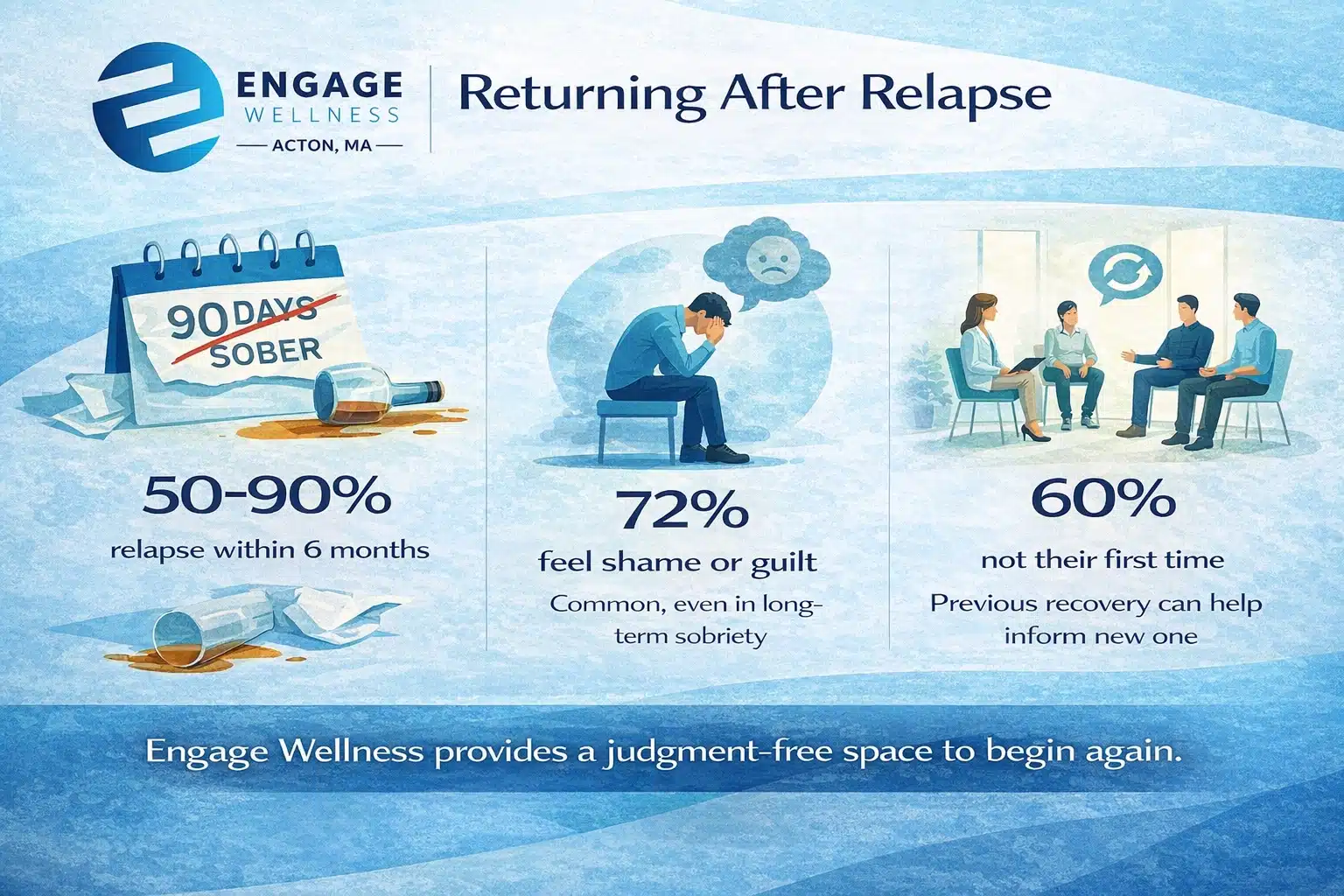
One of the most painful realizations during my second time in day treatment was that I had stayed sober out of fear—not out of freedom.
I was afraid of consequences. Afraid of what people would think. Afraid of who I might become again.
But I hadn’t built a recovery that made space for joy. Or creativity. Or rest.
That’s part of why I drank again. Not because I wanted to lose everything—but because I hadn’t yet learned how to live fully without alcohol. Sobriety had become a cage instead of a choice.
This time, I wanted something different.
Maybe the most healing moment came in group when someone else said, “This isn’t my first time either.”
That cracked something open in the room. The energy shifted. People started nodding. Admitting they’d relapsed before. Sharing what brought them back.
And in that moment, I realized: this is what recovery looks like. Not a straight line. Not a badge you earn and never take off. But a winding path where sometimes, returning is the most courageous thing you can do.
I’m not going to pretend it was easy. There were days I wanted to quit again. Days I wondered if I’d ever feel like myself.
But Engage Wellness met me where I was—not where they thought I should be. They helped me rebuild trust with myself, not by pushing me, but by walking with me.
I started showing up again—first to sessions, then to myself. Slowly, the shame faded. In its place came something softer: self-respect.
Not because I was “doing great.” But because I wasn’t hiding anymore.
Yes. Many people relapse after a few months of sobriety. It’s often when the structure and support of early recovery fade but deeper emotional work hasn’t been fully addressed yet. You are not alone.
Absolutely not. At Engage Wellness, we understand relapse as a part of many people’s healing process—not a moral failure. You’ll be welcomed with compassion and professionalism.
Not necessarily. We’ll assess where you are and help tailor a day treatment plan that fits your current needs, goals, and life circumstances. You’re not starting from zero.
That’s more common than you think. Readiness isn’t a feeling—it’s a decision. We can support you even if you’re still feeling unsure, ashamed, or afraid.
Yes. Everything you’ve learned still lives in you. Your previous work, insight, and growth don’t disappear. They become the foundation you build from now.
If you’re here because you slipped—if the shame is heavy, and the silence is louder than ever—I hope you hear this:
You are not starting over.
You are returning. And that matters. That’s strength.
Call (978) 699-9786 to learn more about our Day Treatment services in Acton, MA, Somerville, Framingham, Quincy, Lynn, Medford Whether it’s your first time, your second, or your tenth—you’re still welcome. You’re still worth it. And your healing isn’t done. It’s just beginning again.


© 2025 Engage Wellness. All Rights Reserved. Proudly Treating Drug & Alcohol Addiction in Massachusetts | SEO by DIGITECH | Sitemap | Privacy Policy