
Alcohol Treatment
Going Back Felt Like Failure: How I Gave Alcohol Treatment Another Chance

Written By
Alcohol Treatment
Written By
I swore I’d never go back.
Not because I didn’t want to change—but because I already tried. And when I left that first program feeling just as confused and still drinking weeks later, I told myself it must not have worked. Not for me. Maybe not for anyone.
So, when I found myself back on a treatment center website months later, with a quiet knot of dread in my stomach, I didn’t feel hopeful. I felt ashamed.
It felt like failure.
But looking back now? That moment—the one where I typed “alcohol treatment in Acton, MA” into my search bar again—wasn’t failure. It was a turning point. A tired, scared, imperfect attempt at hope. And it changed everything.
When I first went to treatment, I expected it to “work.” I don’t even know what that meant, but I had this idea that if I showed up and followed the rules, something inside me would shift. That I’d be “better.”
But it didn’t happen.
I went through the motions. Sat in groups that didn’t feel like mine. Nodded at phrases like “one day at a time,” even though they didn’t land. I stayed sober for a little while. Then I didn’t.
And when I started drinking again, the shame was immediate—and heavy. I thought: So I guess it didn’t work. Or maybe I didn’t.
That shame is what kept me away for so long. Because no one talks about how much it stings when you try something that’s supposed to help… and you still hurt.
After that, I stayed away from anything with the word “treatment” in it. I read books. I followed sober influencers. I cut back. I made rules: No drinking on weekdays. Only two on weekends. Never alone.
Spoiler: I broke every one of those rules—quietly, and often.
I wasn’t out of control, but I wasn’t okay. Drinking was still part of how I coped. It took the edge off. It filled silence. It numbed things I didn’t want to name. And it came with the same side effects every time: regret, exhaustion, disconnection.
There’s a specific kind of loneliness that comes from knowing you need help, but not trusting it anymore.
You might expect me to say I hit some dramatic low point. That I woke up in a ditch or ruined a relationship or got arrested.
But the truth is quieter than that.
It was just one night—normal, unremarkable—when I was home alone, drinking wine on a weeknight after a decent day. Nothing terrible had happened. I just suddenly felt tired of my own voice in my head. The justifications. The regrets. The bargaining. The loneliness I couldn’t seem to shake.
And I thought: Is this really it? Is this just… how it’s going to be?
I didn’t want to wake up 10 years later still asking myself that.
So, I googled alcohol treatment. Again.
I wish I could say I felt proud or empowered the moment I called a center. But I didn’t. I felt like I was admitting defeat.
I kept thinking: They’ll know I’ve done this before. They’ll judge me. They’ll think I’m one of those people who can’t be helped.
But what I heard on the other end of the phone was something different.
I heard someone who didn’t flinch when I said, “I tried before, and it didn’t work.”
They just said, “Let’s figure out what didn’t work—and try something that might.”
That moment softened something in me. I realized maybe I wasn’t broken. Maybe I’d just been trying to fit into the wrong thing.
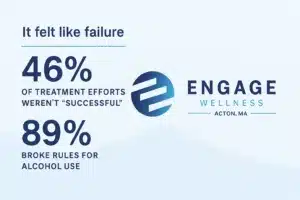
At Engage Wellness in Acton, I found something I didn’t know to look for before: a space where honesty was allowed to be messy.
This time, I didn’t pretend to be more ready than I was. I said “I’m skeptical.” I said “I don’t know if I belong here.” And no one rushed to convince me otherwise. They just made room for me to find out.
My therapist didn’t use buzzwords. They used questions.
Group wasn’t about performance—it was about showing up however I actually felt. Some days I talked. Some days I didn’t. Both were okay.
This time, the structure felt supportive, not stifling. The tools we practiced actually applied to real-life moments—stress at work, family stuff, the 5 p.m. craving when dinner’s not even made yet.
I wasn’t fixed. But I was finally being met.
You can’t fail at recovery. You can only pause.
And trying again doesn’t erase the first attempt. It builds on it.
Because the truth is, I didn’t come back to treatment with nothing. I came back with insight, lived experience, and a way more honest sense of what I actually needed.
That first time wasn’t wasted. It was groundwork.
What felt like failure was actually the foundation for something that finally helped me feel like I wasn’t drowning.
Here’s what I’d say if you’re sitting where I was, staring at a website or a number and thinking, Why would this time be any different?
I get it.
Skepticism is allowed. You don’t have to be all-in or 100% sure to start again. You just have to be curious enough to try.
Not every program fits every person. That doesn’t make you a bad candidate for help—it just means you haven’t found the right support yet.
There’s more than one way through this. And you’re allowed to take the long, crooked way. You’re allowed to come back.
Recovery hasn’t been linear for me. I still have days where I miss the “off” switch alcohol used to provide. I still get irritable and anxious and doubt myself.
But now, I have other tools. Other people. Other ways to deal with stress that don’t leave me ashamed and dehydrated at 2 a.m.
I’m learning to build a life I don’t want to escape from—and that, to me, is what recovery really means.
Not at all. If you’ve been in treatment before, that experience is part of your story. A good program will honor that and build on what you already know—not make you repeat everything.
Yes. Relapse is common and never a reason to be denied help. At places like Engage Wellness, relapse isn’t treated as failure—it’s treated as information. What didn’t work? What might work better this time?
Ask questions. Look for centers that don’t just offer a list of services—but talk about how they approach recovery. Trauma-informed care, individualized plans, and flexibility in attendance (like IOP or outpatient) are good signs.
Yes. Good programs expect this. Leaving and coming back is part of how some people find their way. There’s no punishment, only an open door.
Yes—Engage Wellness offers outpatient alcohol treatment options that work for people with jobs, families, and real-world commitments. You don’t have to disappear to get help.
Trying again doesn’t mean you’re weak. It means you’re still fighting for something better.
If you’ve been burned before, I see you. If you feel jaded, I hear you. If you want to believe—but don’t quite yet—that’s okay.
You don’t need to be perfect to be helped. You just need to be willing to take one more look. One more call.
Need someone to talk to?
Call (978) 699-9786 or visit Engage Wellness’s Alcohol Treatment page to explore options that actually meet you where you are.
There’s no shame in starting again. Only strength.



© 2025 Engage Wellness. All Rights Reserved. Proudly Treating Drug & Alcohol Addiction in Massachusetts | SEO by DIGITECH | Sitemap | Privacy Policy